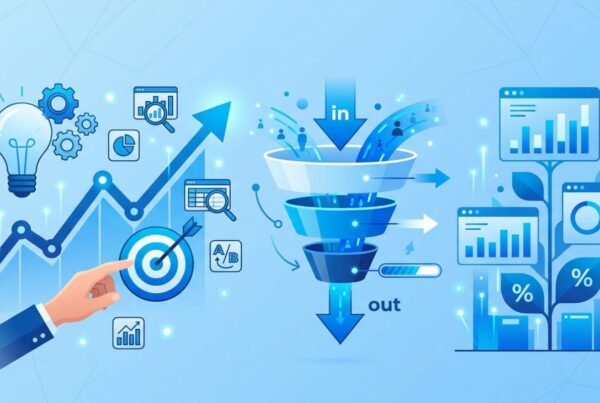
Facebook ads remain a gold mine for Malaysian SMEs – but only if you use the right strategy.
What many agencies won’t admit is that bombarding prospects with sale-focused ads from day one is like shopping on credit: risky and expensive. Instead, smart advertisers front-load engagement.
They run post engagement ads and other social ads to boost likes, comments and shares first, then retarget those engaged users with conversion-oriented campaigns.
By leading with engaging, informative posts – sometimes even testing ad creatives on a shoestring budget – you build valuable social proof and warm up audiences.
In Malaysia’s crowded marketplaces, this engagement-first approach can dramatically improve your ROI. It’s a secret many agencies won’t tell you because it takes patience – but it works.
In this article, you’ll understand Facebook ads strategy most agencies won’t tell you about and have actionable strategies to apply.
The secret of Facebook Ads Strategies
In practice, the “secret” often looks like this: first, boost a post or run a Facebook engagement ad to a very specific audience (e.g. fans of local Malay music or Bahasa travel pages).

This yields plenty of post likes and comments, which not only builds brand awareness but also primes Facebook’s algorithm to show your page to more people organically.
Then, you take the pool of engaged users (people who liked, shared, or clicked the ad) and run a conversion ad or offer specifically to them.
These warmed-up users are far more likely to buy, because they’ve already interacted with your brand. In fact, experts note that an engaged user is up to 70% more likely to convert than a cold prospect.
It’s almost like a secret handshake: once Facebook knows someone likes your stuff, it’s easier to sell to them.
This approach requires Facebook PPC management finesse. You need to set up custom audiences (for the people who engaged) and lookalike audiences.
It also requires crafting quality content – because engagement ads need interesting posts. But the payoff is huge: cheap clicks, strong social proof, and ultimately better ROAS (return on ad spend).
Many agencies focus only on quick conversions and hide this step because it takes longer to see direct sales.
But smart cross-border marketers (even those selling from Malaysia into neighboring markets) know that building engagement first makes every Ringgit of ad spend go further.
What Results Should You Expect from Facebook Ads?
When you start running Facebook campaigns, set realistic expectations. It helps to know some benchmarks. Globally, average Facebook ad click-through rates (CTR) hover around 1–2%.
Malaysian averages can be similar or even higher in consumer-friendly niches, because Malaysia’s CPCs (cost per click) tend to be very low – around 75% below US averages. In practice, you might see CTRs from 1% up to 4% in attractive categories, and CPCs on the order of RM0.15–RM0.50 (USD$0.04–$0.12) in common segments.

What this means in numbers: if you spend RM100 and your CPC is RM0.25, you get about 400 clicks. If 5% of those clicks convert (typical for a decent funnel), that’s 20 conversions.
If each conversion (sale or lead) brings in RM50 in revenue or value, then RM100 spend turned into RM1,000 revenue – a 10× ROAS. Of course, results vary. Consumer goods can sometimes see 4–5× ROAS for well-optimized campaigns, while service businesses might be happy with 2–3× depending on margins. Some industries (like specialty retail or training) can achieve a ROAS above 10:1 if the funnel is tight.
When it comes to engagement numbers, a small page post might reach 10–30% of your targeted audience, and an engagement ad can multiply that reach. Many local businesses see hundreds of post likes or comments on a single boosted post, which in turn leads to free additional reach.
You might even get a viral boost if your content resonates. This means even a modest ad spend (e.g. RM200) can put your message in front of thousands of Malaysians and produce dozens of meaningful interactions.
These engagement metrics (likes, comments, shares) aren’t the end goal, but they predict future sales: each like or share is a potential new customer lead.
Bear in mind the timeline: the best results often come with continuous optimization. In week 1 of a campaign, Facebook’s learning phase might show higher costs and lower conversions.
By week 2–3, things usually stabilize as the algorithm finds the right users. After a month, if a campaign is solid, ROAS should settle at a profitable level. If it doesn’t, you iterate on targeting or creative.
In short, you should expect Facebook ads to deliver measurable traffic and conversions at low cost (thanks to Malaysia’s low CPC). However, the exact numbers depend on your offer and funnel.
A good agency (or marketer) will set benchmarks based on industry norms and refine targets as data comes in. Always ask for realistic KPIs: don’t expect magic overnight, but know that doubling your sales or leads in a quarter is often achievable with a proper strategy.
How to Tell If a Facebook Ad Is Worth Your Money
How do you know if your Facebook ad spend is paying off? The answer is track everything and focus on ROI. The most telling metric is ROAS – Return on Ad Spend. This simply answers “Is this campaign making money?”. For example, if you spend RM500 and get RM1,500 in sales directly attributable to the ad, that’s a 3:1 ROAS, a very clear win.

Agencies emphasize ROAS because “if ROAS looks bad, other campaign aspects lose significance”. It’s the true bottom-line metric. If your ROAS drops below 1:1 (meaning you’re spending more than you earn), the ad isn’t worth it – unless you have a longer-term value story (like expensive products with repeat business).
Closely related is Cost Per Acquisition (CPA). If you know how much a new customer or lead is worth, CPA tells you directly if you’re breaking even.
For example, if a new customer is worth RM100 to your business, you’d ideally keep your CPA well under that (say RM20–30) to allow profit. If the CPA creeps above your customer value, it’s time to adjust the ad.
Agencies often calculate True Action Value for each conversion – essentially the lifetime value – to find a “sweet spot” CPA.
Always use Facebook’s Pixel to track conversions (sales, sign-ups, etc.) on your website. Without it, you’re flying blind. Check your Ads Manager custom reports and dashboards to see metrics like ROAS, CPA, and conversion rate for each ad set.
Also look at analytics and attribution tools (like Google Analytics or Meta’s Attribution settings) to ensure that you’re crediting the right touch points. If an ad is driving desirable actions (like purchases or sign-ups) at a cost you’re happy with, it’s worth the spend. If not, then even high engagement doesn’t justify it in the short term.
It can be tempting to gauge worthiness by vanity metrics (likes, shares) or indirect signals (comments). But those only matter insofar as they lead to revenue. If your primary goal is sales, then focus on revenue metrics.
A catchy rule: “Are you getting more in than you put in?” If yes, then it’s worth it. If the ad is breaking even (ROAS ~1:1), it might be worth it if it brings other benefits like new email leads or brand awareness – but ideally, aim above break-even.
For brand or awareness campaigns (when immediate ROI isn’t the goal), you can gauge worth by lift in search volume for your brand or an increase in website traffic after the ad runs – but again, only if that aligns with your business goals.
Above all, compare Facebook ads against alternatives. Facebook’s strength is hyper-targeting. If a RM10 ad reaches 1,000 Malaysians who fit your ideal profile (and even a handful convert), that’s often better than a generic channel.
But if after testing you find that the same spend on Google ads or other channels yields better conversions, then reallocate. Good agencies perform this cross-channel comparison: see which channel gives higher ROAS.
Don’t stick with Facebook just because you spent budget; move spend to whatever delivers the best bottom line for your specific business.
What Success Metrics Matter Most in Facebook Ads
When measuring success, not all metrics are created equal. Here are the key ones to track:
- ROAS (Return on Ad Spend): The profit indicator. As discussed, ROAS (revenue ÷ ad spend) is the ultimate measure. E-commerce clients often aim for 4:1 or higher, while services may target 2:1. A strong ROAS shows the financial return of your campaign. Always track ROAS by campaign and by product line to see what’s truly profitable.
- CPA (Cost Per Acquisition): How much you pay for each desired action (lead or sale). Track CPA for each conversion event and audience. A low CPA relative to your customer lifetime value means the ad is efficient. If CPA trends upward unexpectedly, it can signal ad fatigue or audience saturation.
- Conversion Rate: The percentage of people who clicked an ad and then completed a conversion (purchase, signup, etc.). Conversion rate ties the ad’s traffic to real outcomes. High conversion rates indicate your targeting and landing pages match well with the ad promise. Low conversion (but high CTR) may mean your ad is compelling but your landing page or offer needs work.
- CTR (Click-Through Rate): Clicks ÷ impressions. This gauges how well your ad creative and message resonate. A higher CTR (above 1%) generally means good creative and targeting. However, CTR is not the final goal – a killer CTR that leads to zero conversions isn’t good. Still, a decent CTR is important; it also boosts your relevance score (which can lower CPC). Industry averages vary: Shopping or Retail ads can see CTRs over 3–4%, while Services or Finance might sit under 1%. Use CTR to compare ad variations and improve your creative.
- Engagement Rate: For engagement-campaigns specifically, track likes, comments, shares, and video views. Engagement reflects audience interest. For example, running a boosted post (Page Post Engagement ad) is judged by how many people like or share it. A high engagement rate can reduce future ad costs through better organic reach. Note that these metrics matter most when the campaign objective is awareness or brand building, not direct sales.
- Reach & Frequency: Reach is the number of unique people who saw your ad; frequency is how many times each person saw it on average. Track reach to ensure you’re covering enough of your target market. Watch frequency: if it gets too high (e.g. >7 over a week) and performance drops, your audience may be fatigued. In long-running campaigns, keep an eye on frequency trends to refresh creatives as needed.
- Quality/Relevance Scores (Ad Metrics): Facebook provides metrics like Quality Ranking and Conversion Rate Ranking. These aren’t directly business results, but they help you diagnose ads. If your relevance is low, you may get higher costs and should improve the ad. These are secondary metrics to monitor after revenue metrics.
- Longer-term Effects: For a broader perspective, consider metrics like increase in fan base, brand lift surveys, or even repeat purchase rate. For cross-border or growth-driven businesses, look at how Facebook ads contribute to overall sales trends or market share over months. But remember, these are downstream; the above metrics (ROAS, CPA, CTR, etc.) are the immediate success indicators.
In essence, dollars in vs dollars out (ROAS/CPA) matter most. That said, don’t ignore creative resonance metrics (CTR, engagement), because those tell you how well the ad connects with people. Combining them gives a full picture. For example, a high CTR with low conversion means creative is good but maybe audience or funnel needs work.
Conversely, a solid conversion rate but low CTR suggests you might expand targeting to find more customers. Always interpret multiple metrics together to see the story of your campaign’s success or weaknesses.

Finally, remember the human element. Ask yourself: are people actually interacting or just ignoring your ads?
Talk to customers in Malaysia, solicit feedback, and adjust accordingly. Real engagement (comments in local languages, tag-a-friend shares, etc.) is a qualitative metric that can signal if your content resonates culturally.
And because Malaysian SMEs often sell across borders, leverage Facebook’s global reach: tailor ads in English or Bahasa, and analyze which language/ad combo drives better conversions regionally.
Conclusion
Real results come from blending engagement-building with rigorous tracking. A hidden Facebook Ads strategy that agencies may skip is to build an audience of engaged users first, then sell to them.
This secret sauce – engagement-first ads followed by smart retargeting – multiplies ROI.
You can benchmark your own results against industry averages (CTR around 1–2%, CPC often <RM0.50) and always let ROAS and CPA guide your decisions.
For Malaysian SMEs looking to master Facebook ads, it pays to dig into these strategies. To learn more about making social media ads work, check out Ara Semangat Asia’s Social Media Marketing service and our guide on why Facebook & Instagram ads still work in 2026.
By focusing on the right metrics and audience, and by using engagement as a stepping stone, you’ll unlock Facebook ad performance that most agencies won’t share – and drive real growth for your business.